The India Climate Observatory

Commentary, action and research on climate and development in India

  • Home
  • About
  • Monsoon 2018
  • Current
  • Bulletin
  • Contact
  • Announcements

Between contemplation and climate

June 8, 2017 by Climate portal editor Leave a Comment

Whether or not the USA, Europe, the Western world, the industrialised Eastern world (China, Japan, South Korea, Taiwan), adhere to or not their paltry promises about being more responsible concerning the factors that lead to climate change, is of very little concern to us. We have never set any store by international agreements on climate change.

This year will see the twenty-third conference of parties of the UN Framework Convention on Climate Change and for 23 years the world and India have listened to lofty tales about simple science. In these 23 years, neither has reckless consumption been halted nor has the economic model that encourages such reckless consumption been questioned by the conference of parties. As long as they do not, inter-governmental agreements are useless.

That is why we find unnecessary and pointless the hand-wringing that has taken place about the decision of the government of the USA to exit what is called the ‘Paris Agreement’, the December 2015 document agreed to and signed by practically every country which has some fuzzy paragraphs about low-carbon economy, innovation, technology, energy and finance – all of which have very much to do with the hold of the finance capitalists and the global technocrats over the international systems of our time.

President number 45 of the USA is neither wiser than nor baser than the wisest of basest of any of his predecessors: the American political system has to do entirely with the desire to dominate other countries. Number 45’s manner may be irksome, but through him speaks the American finance capital, its bloatsome defence industry and its insensate technology industry.

We do not expect the chiefs of the Western countries, the so-called major powers of the European Union, and their allies such as Japan and Australia to do any less. They are no different. We do not think any of them, their armies of bland advisers, their bankers and the brigades of industrialists great and petty who crowd their corridors of governance have read, much less reflected, on the lambent wisdom of our civilisation.

Many centuries ago, in the section of the Digha Nikaya, or Collection of Long Discourses, called Samannaphala Sutta, or the Fruits of the Contemplative Life, it was written that there are those who are addicted to debates and shout: “You understand this doctrine and discipline? I’m the one who understands this doctrine and discipline. How could you understand this doctrine and discipline? You’re practicing wrongly. I’m practicing rightly. I’m being consistent. You’re not. What should be said first you said last. What should be said last you said first. What you took so long to think out has been refuted. Your doctrine has been overthrown. You’re defeated. Go and try to salvage your doctrine; extricate yourself if you can!”

And this is how we view what are called climate negotiations, between the experts of countries. We care not for the arguments of number 45 of the USA, for what many in the world in the last week have protested as being absurd – it undermines economy, it takes away jobs, it is unfair, it is disadvantageous to us, and so on – is what they cheer and support their own countries for in areas where they stand to gain, such as trade (to sell cheap and useless goods), technology (to enslave and control), finance (to spin webs of debt), processes of modernisation (to homogenise cultures so that ever more ‘markets’ come into being).

We in India need no such instruction. But we must guard against our philosophies being swept away by these agreements, these grand comities of nations, the barrage of numerics and scientifics that are invented to display to us what a threat we are should we not emulate the West and its ways. We must guard against our own who prefer the baubles of post-industrial society to the intellectual and spiritual riches of our civilisation, and who seek to infest India with the same technological and ‘modern’ wares that so entranced the West and doomed its folk. This has very little to do with climate and its change and very much more to do with our Indic sciences and their worth, our conduct and our duty to Punyabhoomi Bharat.

– Rahul Goswami
Filed Under: Blogs Tagged With: Bharat, civilisation, climate, Climate Change, convention, Europe, finance, India, Paris accord, Paris agreement, philosophy, technology, UN, UNFCCC, USA

Mr Javadekar, our country does not gamble with carbon

April 3, 2015 by Climate portal editor Leave a Comment

RG_ICP_20150403

There is a message New Delhi’s top bureaucrats must listen to and understand, for it is they who advise the ministers. The message has to do with climate change and India’s responsibilities, within our country and outside it. This is the substance of the message:

1. The Bharatiya Janata Party-led National Democratic Alliance government must stop treating the factors that contribute to climate change as commodities that can be bartered or traded. This has been the attitude of this government since it was formed in May 2014 – an attitude that says, in sum, ‘we will pursue whatever GDP goals we like and never mind the climate cost’, and that if such a pursuit is not to the liking of the Western industrialised world, India must be compensated.

2. Rising GDP is not the measure of a country and it is not the measure of India and Bharat. The consequences of pursuing rising GDP (which does not mean better overall incomes or better standards of living) have been plain to see for the better part of 25 years since the process of liberalisation began. Some of these consequences are visible in the form of a degraded natural environment, cities choked in pollution, the rapid rise of non-communicable diseases, the economic displacement of large rural populations. All these consequences have dimensions that deepen the impacts of climate change within our country.

3. There are no ‘terms of trade’ concerning climate change and its factors. There is no deal to jockey for in climate negotiations between a narrow and outdated idea of GDP-centred ‘development’ and monetary compensation. The government of India is not a broking agency to bet a carbon-intensive future for India against the willingness of Western countries to pay in order to halt such a future. This is not a carbon casino and the NDA-BJP government must immediately stop behaving as if it is.

The environment minister, Prakash Javadekar, has twice in March 2015 said exactly this: we will go ahead and pollute all we like in the pursuit of our GDP dream – but if you (world) prefer us not to, give us lots of money as compensation. We condemn such an attitude and we condemn such a statement. Javadekar has made such a statement, but we find it deeply worrying that a statement like this may reflect a view within the NDA-BJP government that all levers of governance are in fact monetary ones that can be bet, like commodities can, against political positions at home and abroad. If so, this is a very serious error being made by the central government and its advisers.

Javadekar has most recently made this stand clear in an interview with a foreign news agency. In this interview (which was published on 26 March 2015), Javadekar is reported to have said: “The world has to decide what they want. Every climate action has a cost.” Worse still, Javadekar said India’s government is considering the presentation of a deal – one set of commitments based on internal funding to control emissions, and a second set, with deeper emissions cuts, funded by foreign money.

Earlier in March, during the Fifteenth Session of the African Ministerial Conference on Environment (in Cairo, Egypt), Javadekar had said: “There has to be equitable sharing of the carbon space. The developed world which has occupied large carbon space today must vacate the space to accommodate developing and emerging economies.” He also said: “The right to development has to be respected while collectively moving towards greener growth trajectory.”

Such statements are by themselves alarming. If they also represent a more widespread view within the Indian government that the consequences of the country following a ‘development’ path can be parleyed into large sums of money, then it indicates a much more serious problem. The UNFCCC-led climate change negotiations are infirm, riddled with contradictions, a hotbed of international politics and are manipulated by finance and technology lobbies. It remains on paper an inter-governmental arrangement and it is one that India is a part of and party to. Under such circumstances, our country must do all it can to uphold moral action and thinking that is grounded in social and environmental justice. The so-called Annex 1 countries have all failed to do so, and instead have used the UNFCCC and all its associated mechanisms as tools to further industry and foreign policy interests.

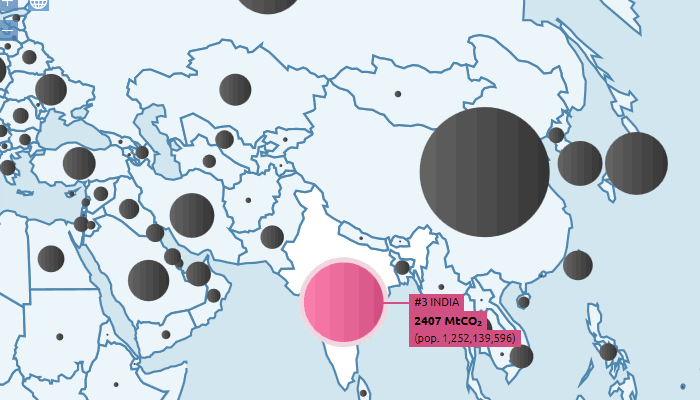
It is not in India’s nature and it is not in India’s character to to the same, but Javadekar’s statement and the government of India’s approach – now made visible by this statement – threatens to place it in the same group of countries. We protest such a misrepresentation of India. According to the available data, India in 2013 emitted 2,407 million tons of CO2 (the third largest emitter behind the USA and China). In our South Asian region, this is 8.9 times the combined emissions of our eight neighbours (Pakistan, 165; Bangladesh, 65; Sri Lanka, 15; Myanmar, 10; Afghanistan, 9.4; Nepal, 4.3; Maldives, 1.3; Bhutan, 0.7). When we speak internationally of being responsible we must first be responsible at home and to our neighbours. Javadekar’s is an irresponsible statement, and is grossly so. Future emissions are not and must never be treated as or suggested as being a futures commodity that can attract a money premium. Nor is it a bargaining chip in a carbon casino world. The government of India must clearly and plainly retract these statements immediately.

Note – according to the UNFCCC documentation, “India communicated that it will endeavour to reduce the emissions intensity of its GDP by 20-25 per cent by 2020 compared with the 2005 level. It added that emissions from the agriculture sector would not form part of the assessment of its emissions intensity.”

“India stated that the proposed domestic actions are voluntary in nature and will not have a legally binding character. It added that these actions will be implemented in accordance with the provisions of relevant national legislation and policies, as well as the principles and provisions of the Convention.”

Filed Under: Reports & Comment Tagged With: Bharat, BJP, carbon, climate, Climate Change, climate funds, economy, emissions, GDP, INDC, India, intensity, NDA, pollute, technology, UNFCCC

Climate, Bharat and junk food

January 28, 2015 by Climate portal editor Leave a Comment

RG_ICP_20150128

We are being misinformed and poorly entertained. There is a great big complex apparatus that tells us, as it has done for most of the last 20 years, that climate change is about science and observation, about technology and finance. This is the international apparatus. Then there is the national bedlam, comprising government, NGOs, think-tanks, research institutes and academia, industry and business, capital markets and finance. The national bedlam on climate change contains many views, some of which are directly related to the international apparatus. Our government, usually in the form of utterances by the Ministry of Environment, Forests and Climate Change, attempts to connect economics to everything else it thinks is important, and present the resulting mess as our climate change policy, which only provokes more bedlam.

Such is the state of affairs in India concerning climate change. Industry and finance, whatever their motivations (profit, market, subsidies, friendly politicians, and so on), are fairly consistent in what they say they want. NGOs and think-tanks – most of which function as localised versions of the international apparatus – are responsible for an outsized share of the bedlam, for they must not only protect the interests of their principals (usually in the West) but at the same time be seen to be informed, authoritative and influential at home. Ordinarily, this renders them schizophrenic, but the hullabaloo surrounding climate change in India is so loud, no-one notices the schizophrenia of the NGOs and think-tanks. Media – that is to say, vapid but noisy television and dull but verbose print commentators – sides with one group or another depending on who’s paying for the junkets.

The punctuations in this long-running and episodic climate change opera that we witness in India are the annual international gatherings, and the erratic policy pronouncements by the central government. For most people, struggling with food price inflation, with urban living environments choked by particulate matter, hounded by creditors and surrounded by useless gadgetry, climate change is a non-subject. And so the middle class stays out of the bedlam, for it is too busy negotiating the storied ‘growth’ of India or breathlessly seeking to profit from it in as many ways as there are flavours of potato chips. Who is left from the 1.275 billion Bharat-vaasis who can cast an appraising eye on the bit players and techno-buskers, and who can judge for themselves the consequences of their actions? We don’t know. And it is such not knowing that balances, with a taut silence, the bedlam of the posturing think-tanks, the technology fetishists, the grasping NGOs, the carbon merchants and their political cronies.

It has helped us not at all to be served, every other week or so, the bland intellectual regurgitations of India’s talking climate heads. It has helped us not at all to be preached at (faithfully reported, accompanied by appropriate editorial cant) by the United Nations whose agency, the UNFCCC, has fostered 20 years of expensive gatherings designed to deceive thinking folk. It has helped us not at all to have to correct, time and again, a government that does nothing about capitalism’s operatives who consistently attack and dismantle efforts to protect our people from environmentally destructive activities. It has helped us not at all to have dealt out to us, from one ruling coalition to the next, from a fattened ‘empowered group of ministers’ to a PM’s Council that prefers fiat, missions and programmes that speak ‘renewable’ but which refuse stubbornly to talk consumption.

Climate change and Bharat is about none of this and it is about all of this in relation to our behaviour. Ours is the land of air-conditioned youth devouring cup noodles while gesturing with greasy fingers across smartphone screens. It is not the land where their grand-parents tilled fields, tended orchards, walked on pilgrimages and lit lanterns in simple dwellings. But this is now, and here, in urban Coimbatore and Cuttack as much as in rural Darbhanga and Dharwad, the reckoning of the effect of our 1.275 on climate has to do with the buying of cars (bigger and two per family) and the widening of roads.

It has to do with the building of housing ‘complexes’ (modern amenities and 24×7 power, but naturally), the contrived convenience factor of retail food markets whose demands deepen the monoculturing of our land mosaics, once so very diverse with coarse cereals, the myth-making of jobs and employment by cramming vast buildings with directionless migrant youth, and attaching to them (costs calculated by the second) the electronic machinery that makes online retail possible, the imagery of the flick of the switch or click of a button delivering goods and services as though from the horn of plenty, the vacuous promises of imminent superpowerdom and a techno-utopia set to the beat of Bollywood lyrics. We have indeed been misinformed.

– Rahul Goswami

Filed Under: Blogs Tagged With: automobiles, Climate Change, consumption, economy, electronics, employment, environment, GDP, India, jobs, migration, online retail, policy, technology, UNFCCC, youth

Indiaclimate twitter

Tweets by @Indiaclimate

Notable

Between contemplation and climate

Whether or not the USA, Europe, the Western world, the industrialised Eastern world (China, Japan, South Korea, Taiwan), adhere to or not their paltry promises about being more responsible concerning the factors that lead to climate change, is of very little concern to us. We have never set any store by international agreements on climate […]

The ‘Hindu’, ignorant about weather and climate, but runs down IMD

We find objectionable the report by ‘The Hindu’ daily newspaper accusing the India Meteorological Department of scientific shortcoming (‘IMD gets its August forecast wrong’, 1 September 2016). The report claims that the IMD in June 2016 had forecast that rains for August would be more than usual but that the recorded rain was less than […]

dialogue

  • Misreading monsoon | Resources Research on Misreading monsoon
  • Satish on A tribute to the weathermen of Bharat
  • Climate portal editor on A tribute to the weathermen of Bharat
  • Climate portal editor on A tribute to the weathermen of Bharat
  • Climate portal editor on A tribute to the weathermen of Bharat

Categories

Copyright © 2025 indiaclimateportal.org.