The India Climate Observatory

Commentary, action and research on climate and development in India

  • Home
  • About
  • Monsoon 2018
  • Current
  • Bulletin
  • Contact
  • Announcements

Harpal Singh the climate hero

April 17, 2015 by Climate portal editor Leave a Comment

ICP_Harpal_Singh_Maruti_201504

One car for a household all the way from 1983 till today, and Harpal Singh says that’s the way it will be as long as he’s alive and can drive. This elderly New Delhi couple have shown two generations of Indians what responsible consumption is all about.

Harpal Singh and his wife Gulshanbeer Kaur are the owners of the first ever Maruti 800 car manufctured in 1983. The couple bought the car for Rs 47,500 and its ignition key was given to them by Indira Gandhi, who was prime minister at the time. As a generation that grew up in the 1980s knows, the Maruti 800 was a symbol of pride and progress for the country (Photo of the Maruti 800 and the Singhs is from the Hindustan Times).

“Harpal had sold his Fiat car when he bought the Maruti 800 and drove it for the rest of his life,” is significant paragraph in the news feature on the couple. “When the Maruti Zen was launched, the family advised him to upgrade to Zen but he was adamant that he would not leave this car till he is alive.” In a current automobile consumption culture – practiced by the majority of young professionals – which rewards what the marketers cunningly call ‘upgrading’, the common-sense and responsible view of the Singhs deserves to be emulated. It has after all stood them in good stead for 32 years!

A view of the myriad components that comprise a car. The manufacture of each of these, from sheet metal to a few grams of plastic, has en environmental and climate impact. Image courtesy: Volkswagen

A view of the myriad components that comprise a car. The manufacture of each of these, from sheet metal to a few grams of plastic, has en environmental and climate impact. Image courtesy: Volkswagen

Today’s car manufacturers, their financiers and the industry that supports personal mobility will talk about reduced emissions and fuel saving measures that every new model boasts, and they seek to justify frequent ‘upgrades’ with this argument. The truth, as the Singhs divined long ago, is quite different.

In today’s world sustainable mobility demands a much broader approach. Environmental impacts are not produced only while driving. Long before the vehicle ever travels its first kilometre, raw materials must first be extracted, and components must be manufactured – all these have impacts on climate change because they require energy to produce, energy to move, and energy to assemble.

In every phase of automobile manufacture (which we ought to be far more conscious of now than was the case in 1983) energy and resources are consumed and emissions are released into the atmosphere, the soil and water. The inspirational example of the Singhs has enabled us to look at the complete story when assessing a the environmental impact of a personal vehicle. This is important because today’s throw-away-or-upgrade consumer culture (which extends from mobile phones to cars and much else besides) doesn’t reflect about the emissions that are produced at every stage, be it manufacturing, the service life or recycling. The true green economy, as the Singhs will be able to explain, is about living within one’s means and using less.
Filed Under: Blogs Tagged With: automobile, climate, consumption, emissions, energy, fuel, green economy, Maruti, product life cycle

Mr Modi’s carbon nationalism

April 14, 2015 by Climate portal editor Leave a Comment

Modi_Germany_20150413_3

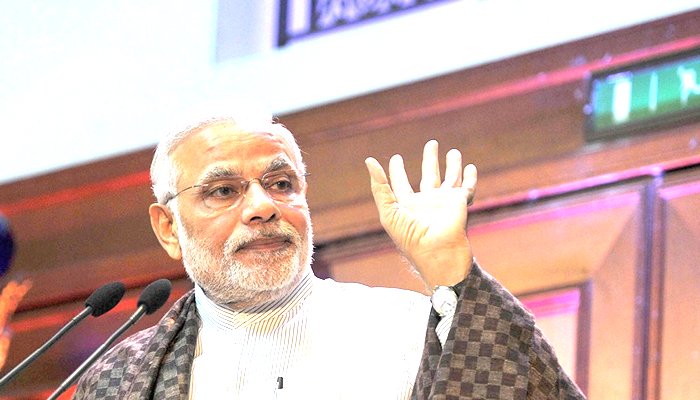
If Prime Minister Narendra Modi were better advised he could avoid being contradictory in his discourses – including informal ones such as the one he delivered a few days ago in Germany – about development, about our traditions and about climate change. The NDA-BJP government is almost a year old, and Modi’s short conversation on these subjects only underlines that his government is still ill-advised on climate change.

There are aspects of his conversation, conducted with the Indian community in Berlin, the capital of Germany, with which we agree. And there are more aspects with which we do not. Here, provided in the order they were reported upon, is what Modi said, followed by our view.

a) “I am surprised that the world is scolding us even though our per capita gas emission is the lowest.”

We cannot calculate our way out of the position that, in April 2015, our population is about 1,275 million people and that each of these people – young and old, rich and poor, urban and rural – is responsible to some degree for emissions. What “the world” is more pertinently reminding us about is that the number of Indian citizens multiplied by an ‘average’ emission does amount to a very large volume of carbon (and of gases that add to global warming and climate change).

What this government ought to be paying very much more attention to are the relative inequalities – inside an apparently low per capita emission. In the first place, minors and seniors generally have a smaller (or even much smaller) individual footprint. That leaves about 688 million adults whose contributions to emissions need to be considered. From this number, it is the 241 million or so adult inhabitants of our urban areas whose contributions count for more, and amongst these it is those who have entered (or are entering) the middle strata of the middle class, and of course those who are wealthier than the middle class, whose individual and household contributions count for even more.

Modi_Germany_20150413_4So the question to the Prime Minister is not about low per capita emissions but about the inequalities present in individual and household emissions responsibilities that are obscured by the large number of 1,275 million. We may be indifferent to the ‘scolding’ of the world, but we do think think there should be far more scolding within India, the states and the cities, for our continuing to use a per capita emissions basis that hides true responsibility.

b) “The whole world is posing questions to us. Those who have destroyed climate are asking questions to us. If anybody has served nature, it is Indians.”

We agree that our serving of nature has been exemplary in recorded and oral histories, but only until the present era and particularly until the immediate contemporary period from around 1990. Over the last generation and a half, we cannot make such a claim.

Our South Asian neighbours – Bangladesh, Nepal, Pakistan and Sri Lanka – have by all three measures relatively small global impacts. The size of our population and the depth of our industry and economy however has made India the third largest emitter of CO2 (after China and the USA). But if India seeks some sort of ‘parity’ in electricity use – or if India sees the low per capita CO2 emissions as a ‘development’ gap – our total contribution to CO2 emissions will only rise faster, hurting the environment (and nature) that we share with our neighbours.

Modi_Germany_20150413_6This is unlikely to result in any constructive recognition of all that is linked. A country’s total emissions is one part of the ‘development’ picture and others are at least as important. There are also tons of CO2 emitted per capita (India has often said that its per capita emissions are far below those of the West). And there is per capita consumption of electricity (which is still mainly generated by burning coal).
c) “India will set the agenda for the upcoming Conference of Parties (COP)” [meeting that is to be held in Paris, France, in September].

As for setting an agenda, what is to be set, with what section of citizens’ agreement and under whose terms, all these remain unknown. Modi’s assertion comes as a surprise then. For the citizens of India and the residents of 35 states and union territories are ignorant of such an agenda, if it exists. We would prefer to recall some of the good advice provided by the IPCC Fifth Assessment Report: “Climate change has the characteristics of a collective action problem at the global scale, because most greenhouse gases accumulate over time and mix globally, and emissions by any agent (individual, community, company, country) affect other agents.”

Modi_Germany_20150413_5Thus the message to policy-makers is clear – what counts is what you do at home, in states and districts. The expectation that “international cooperation” should guide effective adaptation at all levels is no longer (and in our view has never been) tenable.

d) Modi said the solutions to the ‘crisis’ are in India’s traditions and customs, and that India wants solutions to the global problem of climate change.

What we see however is embarrassing proof of our very un-ecological and climate unfriendly new habits. In urban areas – where most of the buying of vehicles for households has taken place – the physical space available for the movement of people and goods has increased only marginally, but the number of vehicles (cars, two-wheelers, goods carriers) has increased quickly. Naturally this ‘growth’ has choked our city wards. More motorised conveyance per household also means more fuel demanded per household, and more fuel (and money) wasted because households are taught (by the auto industry) that they are entitled to wasteful personal mobility. Over 20 years, the number of cars per household has increased 4.1 times but the number of buses per household has increased only 2.8 times. This negligent wastefulness is at odds with the ‘traditions and customs’ referred to by Prime Minister Modi.

Finally, as we pointed out recently, there are no ‘terms of trade’ concerning climate change and its factors. There is no deal to jockey for in climate negotiations between a narrow and outdated idea of GDP-centred ‘development’ and monetary compensation. The government of India is not a broking agency to bet a carbon-intensive future for India against the willingness of Western countries to pay in order to halt such a future. This is not a carbon casino and the NDA-BJP government must immediately stop behaving as if it is.

Filed Under: Current Tagged With: auto industry, BJP, carbon, China, Climate Change, CO2, development, ecology, emissions, environment, EU, Germany, green economy, India, IPCC, Modi, Narendra Modi, NDA, per capita, renewables, UNFCCC, USA

Indiaclimate twitter

Tweets by @Indiaclimate

Notable

Between contemplation and climate

Whether or not the USA, Europe, the Western world, the industrialised Eastern world (China, Japan, South Korea, Taiwan), adhere to or not their paltry promises about being more responsible concerning the factors that lead to climate change, is of very little concern to us. We have never set any store by international agreements on climate […]

The ‘Hindu’, ignorant about weather and climate, but runs down IMD

We find objectionable the report by ‘The Hindu’ daily newspaper accusing the India Meteorological Department of scientific shortcoming (‘IMD gets its August forecast wrong’, 1 September 2016). The report claims that the IMD in June 2016 had forecast that rains for August would be more than usual but that the recorded rain was less than […]

dialogue

  • Misreading monsoon | Resources Research on Misreading monsoon
  • Satish on A tribute to the weathermen of Bharat
  • Climate portal editor on A tribute to the weathermen of Bharat
  • Climate portal editor on A tribute to the weathermen of Bharat
  • Climate portal editor on A tribute to the weathermen of Bharat

Categories

Copyright © 2025 indiaclimateportal.org.