
We present here the summary of India’s Intended Nationally Determined Contributions (INDCs) which have been submitted to the UN Climate Change Convention (the UNFCCC). This summary has been released by the Press Information Bureau, Ministry of Information and Broadcasting. Our analysis of and commentary on India’s INDCs will follow in separate articles.
 The Government of India has said that the country’s Intended Nationally Determined Contributions (INDCs) are balanced and comprehensive. In official statements, the government said that INDCs include reductions in the emissions intensity of its GDP by 33 to 35 per cent by 2030 from 2005 level and to create an additional carbon sink of 2.5 to 3 billion tonnes of CO2 equivalent through additional forest and tree cover by 2030. India has also decided to anchor a global solar alliance, INSPA (International Agency for Solar Policy & Application), of all countries located in between Tropic of Cancer and Tropic of Capricorn.
 The INDCs centre around India’s policies and programmes on promotion of clean energy, especially renewable energy, enhancement of energy efficiency, development of less carbon intensive and resilient urban centres, promotion of waste to wealth, safe, smart and sustainable green transportation network, abatement of pollution and India’s efforts to enhance carbon sink through creation of forest and tree cover. It also captures citizens and private sector contribution to combating climate change.

 The INDCs outline the post-2020 climate actions they intend to take under a new international agreement. The INDCs document is prepared with a view to taking forward the Prime Minister’s vision of a sustainable lifestyle and climate justice to protect the poor and vulnerable from adverse impacts of climate change. Ministry of Environment, Forest and Climate Change adopted an inclusive process for preparation of India’s INDCs. It held stakeholder consultations with the specific involvement of the key Ministries and State Governments. Interactions were also held with civil society organisations, thinktanks and technical & academic institutions of eminence. The Ministry had commissioned Greenhouse Gas (GHG) modeling studies for projections of GHG emissions till 2050 with a decadal gap. The gist of all these consultations & studies were taken on board before submitting India’s INDCs. The government zeroed-in on a set of contributions which are comprehensive, balanced, equitable and pragmatic and addresses all the elements including Adaptation, Mitigation, Finance, Technology Transfer, Capacity Building and Transparency in Action and Support.
 Planned actions and economic reforms have contributed positively to the rapidly declining growth rate of energy intensity in India. The Government of India, through its various institutions and resources, has taken steps to decouple the Indian energy system from carbon in the long run. Despite facing enormous development challenges like poverty eradication, ensuring housing, electricity and food security for all, India declared a voluntary goal of reducing the emissions intensity of its GDP by 20–25%, over 2005 levels by 2020, despite having no binding mitigation obligations as per the Convention. A slew of policy measures to promote low carbon strategies and Renewable Energy have resulted in the decline of emission intensity of our GDP by 12% between 2005 and 2010. It is a matter of satisfaction that United Nations Environment Programme (UNEP) in its Emission Gap Report 2014 has recognized India as one of the countries on course to achieving its voluntary goal.
 India has adopted several ambitious measures for clean and renewable energy, energy efficiency in various sectors of industries, achieving lower emission intensity in the automobile and transport sector, non-fossil based electricity generation and building sector based on energy conservation. Thrust on renewable energy, promotion of clean energy, enhancing energy efficiency, developing climate resilient urban centres and sustainable green transportation network are some of the measures for achieving this goal.
 Solar power in India is poised to grow significantly with Solar Mission as a major initiative of the Government of India. A scheme for development of 25 Solar Parks, Ultra Mega Solar Power Projects, canal top solar projects and one hundred thousand solar pumps for farmers is at different stages of implementation. The Government’s goal of ‘Electricity for All’ is sought to be achieved by the above programs that would require huge investments, infusion of new technology, availability of nuclear fuel and international support.
 The energy efficiency of thermal power plants will be systematically and statutorily improved. Over one million medium and small enterprises will be involved in the Zero Defect Zero Effect Scheme to improve their quality, energy efficiency, enhance resource efficiency, pollution control, waste management and use of renewable energy.
Urban transport policy will encourage moving people rather than vehicles with a major focus on Mass Rapid Transit Systems. In addition to 236 km of metro rail in place, about 1150 km metro projects for cities including Pune, Ahmedabad and Lucknow are being planned. Delhi Metro, which has become India’s first MRTS project to earn carbon credits, has the potential to reduce about 0.57 million tonnes of CO2 e annually. The switch from Bharat Stage IV (BS IV) to Bharat Stage V (BS V) and Bharat Stage VI (BS VI) to improve fuel standards across the country is also planned for the near future.
Renewable energy sources are a strategic national resource. Harnessing these sources will put India on the path to a cleaner environment, energy independence and, a stronger economy. The renewable energy technologies contribute to better air quality, reduce reliance on fossil fuels, curb global warming, add jobs to the economy and, protect environmental values such as habitat and water quality. Over the years India has successfully created a positive outlook necessary to promote investment in, demand for, and supply of, renewable energy. India’s strategy on renewable energy is driven by the objectives of energy security, energy access and also reducing the carbon footprints of the national energy systems. It has evolved over the years through increasingly stronger commitment at federal level.
The institutional arrangement for offtake of renewable energy power will be further strengthened by Renewable Purchase Obligations and Renewable Generation Obligations. India’s share of non-fossil fuel in the total installed capacity is projected to change from 30% in 2015 to about 40 % by 2030. India is running one of the largest renewable capacity expansion programmes in the world. Between 2002 and 2015, the share of renewable grid capacity has increased over 6 times, from 2% (3.9 GW) to around 13% (36 GW) from a mix of sources including Wind Power, Small Hydro Power, Biomass Power / Cogeneration, Waste to Power and Solar Power. On normative terms the CO2 emission abatement achieved from the renewable power installed capacity was 84.92 million tons CO2 eq. /year as of 30 June 2015.
To accelerate development and deployment of renewable energy in the country, the Government is taking a number of initiatives like up-scaling of targets for renewable energy capacity addition from 30GW by 2016-17 to 175 GW by 2021-22.The renewable power target of 175 GW by 2022 will result in abatement of 326.22 million tons of CO2 eq. /year. The ambitious solar expansion programme seeks to enhance the capacity to 100 GW by 2022, which is expected to be scaled up further thereafter. Efforts will include scaling up efforts to increase the share of non-fossil fuel based energy resources in total electricity mix including wind power, solar, hydropower, biomass, waste to energy and nuclear power.
 The range of ecosystem goods and services provided by forests include carbon sequestration and storage. Despite the significant opportunity costs, India is one of the few countries where forest and tree cover has increased in recent years and the total forest and tree cover amounts to 24% percent of the geographical area of the country. Over the past two decades progressive national forestry legislations and policies of India have transformed India’s forests into a net sink of CO2. With its focus on sustainable forest management, afforestation and regulating diversion of forest land for non-forest purpose, India plans to increase its carbon stock. Government of India’s long term goal is to increase its forest cover through a planned afforestation drive which includes number of programmes and initiatives like Green India Mission, green highways policy, financial incentive for forests, plantation along rivers, REDD-Plus & Other Policies and Compensatory Afforestation Fund Management and Planning Authority
For the first time devolution of funds to states from the federal pool will be based on a formula that attaches 7.5 % weight to the area under forest. It takes into account the changing realities in order to rebalance the fiscal system of the country in a way that will incentivize greener distribution of resources. This initiative will give afforestation a massive boost by conditioning about USD 6.9 billion of transfers to the states based on their forest cover, which is projected to increase up to USD 12 billion by 2019-20.
For India, adaptation is inevitable and an imperative for the development process. India is facing climate change as a real issue, which is impacting some of its key sectors like agriculture and water. The adverse impacts of climate change on the developmental prospects of the country are further amplified enormously by the existence of widespread poverty and dependence of a large proportion of the population on climate sensitive sectors for livelihood. It is of immediate importance and requires action now.
In the INDCs, the country has focused on adaptation efforts, including: a) developing sustainable habitats; b) optimizing water use efficiency; c) creating ecologically sustainable climate resilient agricultural production systems; d) safeguarding the Himalayan glaciers and mountain ecosystem; and, e) enhancing carbon sinks in sustainably managed forests and implementing adaptation measures for vulnerable species, forest-dependent communities and ecosystems. India has also set up a National Adaptation Fund with an initial allocation of INR 3,500 million (USD 55.6 million) to combat the adaptation needs in key sectors. This fund will assist national and state level activities to meet the cost of adaptation measures in areas that are particularly vulnerable to the adverse effects of climate change.
India’s climate actions have so far been largely financed from domestic resources. India already has ambitious climate action plans in place. Preliminary domestic requirements to implement national climate plans add upto more than USD 2.5 trillion between 2015 and 2030.Substantial scaling up these plans would require greater resources. Developing countries like India are resource constrained and are already spending enormous amounts on climate change, . Implementing climate change mitigation and adaptation actions would require domestic and new & additional funds from developed countries in view of the resource required and the resource gap.
Urgent efforts to reduce GHG emissions need to take place against the backdrop of a growing energy demand and urbanisation in India. With the responsibility of lifting around 360 million people out of poverty and raising the standard of living of an even greater number of people, technology is the only powerful solution for countries like India that can simultaneously address climate change and development needs. Technology development and transfer and capacity-building are key to ensuring adequate development and deployment of clean-technologies. The technology gap between rich and poor countries remains enormous and the capacity of developing economies to adopt new technology needs to be enhanced. Enhanced action on technology development and transfer will be central in enabling the full and effective implementation of India’s INDCs. Developed countries should be supportive and help in transfer of technology, remove barriers, create facilitative IPR regime, provide finance, capacity building support and create a global framework for Research & Development on clean coal and other technologies.”


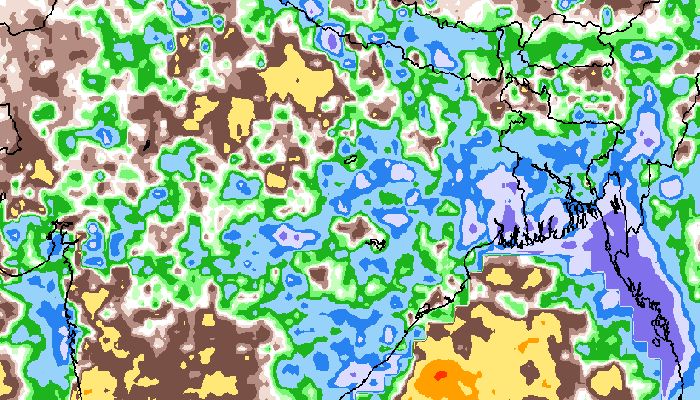 This is our running timeline of tweets with alerts, data and information on monsoon 2015.
 Solar
Solar  Whether the monsoon starts off on time, whether the June, July, August and September rainfall averages are met, and whether the seasonal pattern of the monsoon is maintained are expectations that must now be set aside.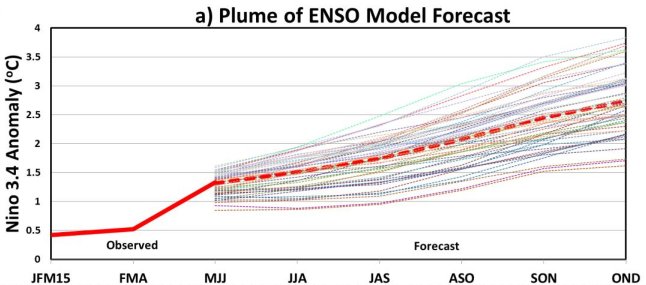
 Every one of Haryana’s 21 districts received excess rain for the period 1 March to 30 April 2015. As these rains have destroyed crops, including food staples, the need to compensate the affected farming families is now paramount. Relief and support are only useful when they are arrive quickly, and unlike administrative conditions two generations ago, state governments and district collectors today can consult data around the clock about conditions in districts and blocks.
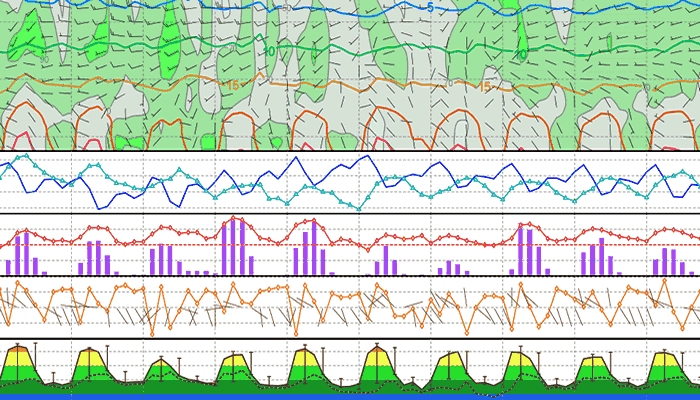 Our coverage of the ‘mausam’, the Indian summer monsoon of 2015, has begun. The unseasonal rains of March and April, which have proved so destructive to farmers, have shown why the conventional monsoon season must be widened. You will find all
 I have taken the data from two sources. One is the Census of India, for the census years 2011, 2001 and 1991. The other is the Road Transport Yearbook (2011-12) issued by the Transport Research Wing, Ministry Of Road Transport and Highways, Government Of India. The yearbook includes a table with the total number of registered vehicles (in different categories of vehicle – two-wheelers, cars, buses, goods vehicles, others) for every year. The number of households is from the census years, with simple decadal growth applied annually between census years. I have not yet found the detailed data that will let me refine this finding between urban and rural populations.
 The implications are several and almost all of them are an alarm signal. Especially for urban areas – where most of the buying of vehicles for households has taken place – the physical space available for the movement of people and goods has increased only marginally, but the number of motorised contrivances (cars, motor-cycles, scooters and more recently stupidly large SUVs and stupidly large and expensive luxury cars) has increased quickly. Naturally this ‘growth’ of wheeled metal has choked our city wards.
 More motorised conveyance per household also means more fuel demanded per household, and more fuel (and money) wasted because households are taught (by the auto industry with the encouragement of the foolish cohorts I mentioned earlier) that they are entitled to wasteful personal mobility. Over 20 years, the number of cars per household has increased 4.1 times but the number of buses per household has increased only 2.8 times. That is embarrassing proof of our un-ecological and climate unfriendly new habits.
